
Amidst escalating tensions in West Asia, India voices strong concerns over the safety of its nationals and the potential disruption to energy supplies, urging dialogue and diplomacy for a swift resolution.

The question is no longer whether the war will expand. It has. The next few days will tell us whether the war stabilises around Hormuz or whether the Strait itself becomes the trigger for a far larger rupture. What to watch for over the next 48 hours is simple: Any move by the US toward direct naval control of the Strait; any credible Iranian attempt to disrupt or mine shipping lanes and, critically, whether energy infrastructure in the Gulf continues to be targeted.If those lines are crossed in tandem, the war will no longer be containable within the region.

Alliances fight wars effectively only when they share an endgame. If Israel acted without US knowledge, then the military alliance is operating without real coordination at the level of strategic targeting. Neither picture is reassuring in a war that is no longer regional in its consequences. Prem Panicker continues his must read daily blog on the Gulf War.

On the table are additional batches of S-400 surface-to-air missile systems from Russia, which India used with immense success during Operation Sindoor. India could buy at least two squadrons of Su-57 fighter jets plus joint production of S-500 air defence systems.

In a region increasingly shaped by competition and coercion, such collaboration strengthens security without confrontation, builds capacity without dependency and promotes order without domination, points out Dr Kumar.
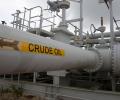
MEA spokesperson Randhir Jaiswal said India's energy decisions are guided by national interest.

Taking Kharg would give the US control over virtually all of Iran's oil exports and thus provide significant leverage, notes Prem Panicker in his must read daily blog on the Gulf War. It would also put American troops within range of Iran's remaining missiles, drones, and artillery on a piece of real estate that is just eight square miles in size, and just 15 miles from the Iranian mainland.

The pause gives the US time to breathe, to regroup, to move its expeditionary force into position without risk of interception along the way. It gives Iran nothing -- on the ground, attacks against its infrastructure continue apace. Prem Panicker in his must read daily blog on the Gulf War.
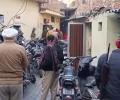
Haryana's Chief Minister Nayab Singh Saini announced a plan to equip police with body cameras, establish new women and cybercrime police stations, and form an Anti-Terrorist Squad as part of a broader effort to modernise the state's police force.

The escalating conflict involving the U.S. and Israel with Iran has led to widespread disruption in the world of sports, with events postponed, travel plans thrown into chaos, and athletes seeking asylum.

Sitharaman continues with the tradition she set in 2019, carrying the budget speech in a 'bahi-khata', which she used after dropping the briefcase tradition.

Iran is fighting a different war: Older, slower, and in some ways more dangerous. Iran doesn't need to shoot down an F/A-18. It only needs to make the Strait of Hormuz feel dangerous long enough for insurance markets, shipping companies, and oil futures traders to do the rest. Prem Panicker continues his must-read daily blog on the war in the Middle East.

The finance minister said that consolidation of state-owned banks could proceed at any time without waiting for the recommendations of the proposed high-level committee on banking.

What is the reason behind this drying up of talent for the top post in private banks?

For weeks, the war skirted the edge of catastrophe without tipping over. Missiles flew, there was much destruction, commanders were assassinated, cities across the Gulf and even in Israel struggled to absorb the shock. But one line held: Energy infrastructure, the arteries of the global economy, remained largely untouched. That is no longer true. Prem Panicker continues his must read daily blog on the Gulf War.
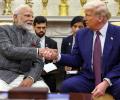
The new US national security strategy signals a retreat from global dominance while reaffirming continuity in India's role in Indo-Pacific security and Quad cooperation, points out former foreign secretary Shyam Saran.

India has joined the US-led 'Pax Silica' alliance, aimed at building a resilient supply chain for critical minerals and artificial intelligence, marking a significant step in strengthening bilateral ties and fostering economic security.

In his address, Jaishankar warned that those who condone nations that sponsor terror will find that it "comes back to bite them".

'After the Galwan clash, the rules of engagement changed with the army commanders allowed to use any means at their disposal as they deem fit for tactical operations.'

The Washington Post Guild, the union for staff members, had appealed to the public to send a message to Bezos: "Enough is enough. Without the staff of The Washington Post, there is no Washington Post."
The policy unveiled by the home ministry is based on seven key pillars to counter the terror threats emanating from India or abroad -- prevention, responses, aggregating internal capacities, human rights and "Rule of Law"-based processes.

Israel wishes to continue its bombing campaign until Iran's military and industrial infrastructure are degraded to a point where it ceases to pose a threat to Israel. Iran, for its part, has learnt from its experience in the 12-day war of last June. Any ceasefire, it believes, will only be a prelude to another attack on itself. It is determined to convey that any attack on Iran will impose heavy costs on Israel, the US, America's allies in the Gulf -- and on the world at large, points out T T Ram Mohan.
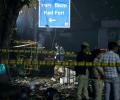
A UN Security Council report indicates that Pakistan-based Jaish-e-Mohammed (JeM) was reportedly linked to a terror attack on the Red Fort in New Delhi. The report also highlights JeM's activities, including the establishment of a women-only wing and its presence in the region.

The IOC has expressed concern for the welfare of Iranian athletes amid escalating unrest, mass arrests and reports of deaths, saying it remains in contact with Iran's Olympic community.

External Affairs Minister S Jaishankar and US Secretary of State Marco Rubio discussed cooperation in trade, critical minerals, nuclear energy, and defence, reaffirming commitment to a free and open Indo-Pacific.
India is closely monitoring developments related to a proposed American legislation that seeks to impose up to 500 per cent tariff on countries procuring Russian crude oil.

Union Minister Pralhad Joshi assures that the Indian government is prepared to bring back Indians stranded in the Gulf region due to the Iran-Israel conflict and disruptions in Dubai, emphasizing citizen safety as the top priority.

Following an examination and discussions held in the aftermath of the United States' decision to withdraw from dozens of international organisations, Israel's Minister of Foreign Affairs, Gideon Sa'ar, has decided that Jerusalem will immediately sever all contact with several United Nations agencies and international bodies, citing what the government described as persistent bias, politicisation and actions hostile to Israel.

Gujarat police arrest a woman allegedly involved in trafficking job aspirants to Myanmar and Thailand for cyber slavery. The accused lured people with promises of high-paying jobs and forced them to work for international cyber crime syndicates.
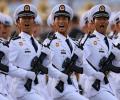
China's latest defence budget surges to $275 billion, fueling its ambitious military modernisation program and intensifying geopolitical dynamics in the region.

'I suspect that Bangladesh being given permission stuck in India's official craw, and this story was an attempt to balance the scales by giving the impression that a similar waiver had been given to India as well.'

What we are watching is something different: A fog manufactured and maintained by the people who started the war, so that the question of why it was started never has to be answered, observes Prem Panicker in his must read blog on the war in the Middle East.

Assam Chief Minister Himanta Biswa Sarma has accused Congress leader Gaurav Gogoi of being a key player in an anti-India network and his wife of being a Pakistani agent, leaving it to the 'people's court' to decide on Gogoi's activities against the country.

Fight on toward goals that keep receding, or exit with most objectives unmet. Trump is agitated, his poll numbers falling below the Plimsoll line, his base fractured between those who back the war and those who remember that he campaigned on ending them.

When everyone has footage and no one can verify it, the loudest voice wins, notes Prem Panicker who begins a daily blog on the War in the Middle East.

Pakistan launched a military operation targeting terrorist hideouts in Afghanistan following a series of attacks, including a suicide bombing that killed Pakistani soldiers. The action comes after repeated calls for the Afghan Taliban to prevent terrorists from using Afghan soil to launch attacks against Pakistan.

Prime Minister Narendra Modi spoke with leaders from Oman, Kuwait, and Qatar, expressing concern over attacks in West Asia and discussing the safety of the Indian community.

'To suddenly give the impression of taking a position that is hostile to Iran, or, at least, not friendly to Iran, is not a good thing.'

Prime Minister Narendra Modi will visit Israel to enhance defence and trade cooperation amid Middle East tensions. Discussions will include defence, security, and the situation in Gaza.

India is aiming to become a global hub for green hydrogen exports, eyeing nearly 10 per cent of the worldwide demand by 2030, Union Minister Shripad Yesso Naik said on Tuesday. Addressing FICCI Green Hydrogen Summit 2025, the minister said 8.62 lakh tonne annual hydrogen production capacity has been awarded to 19 companies.
